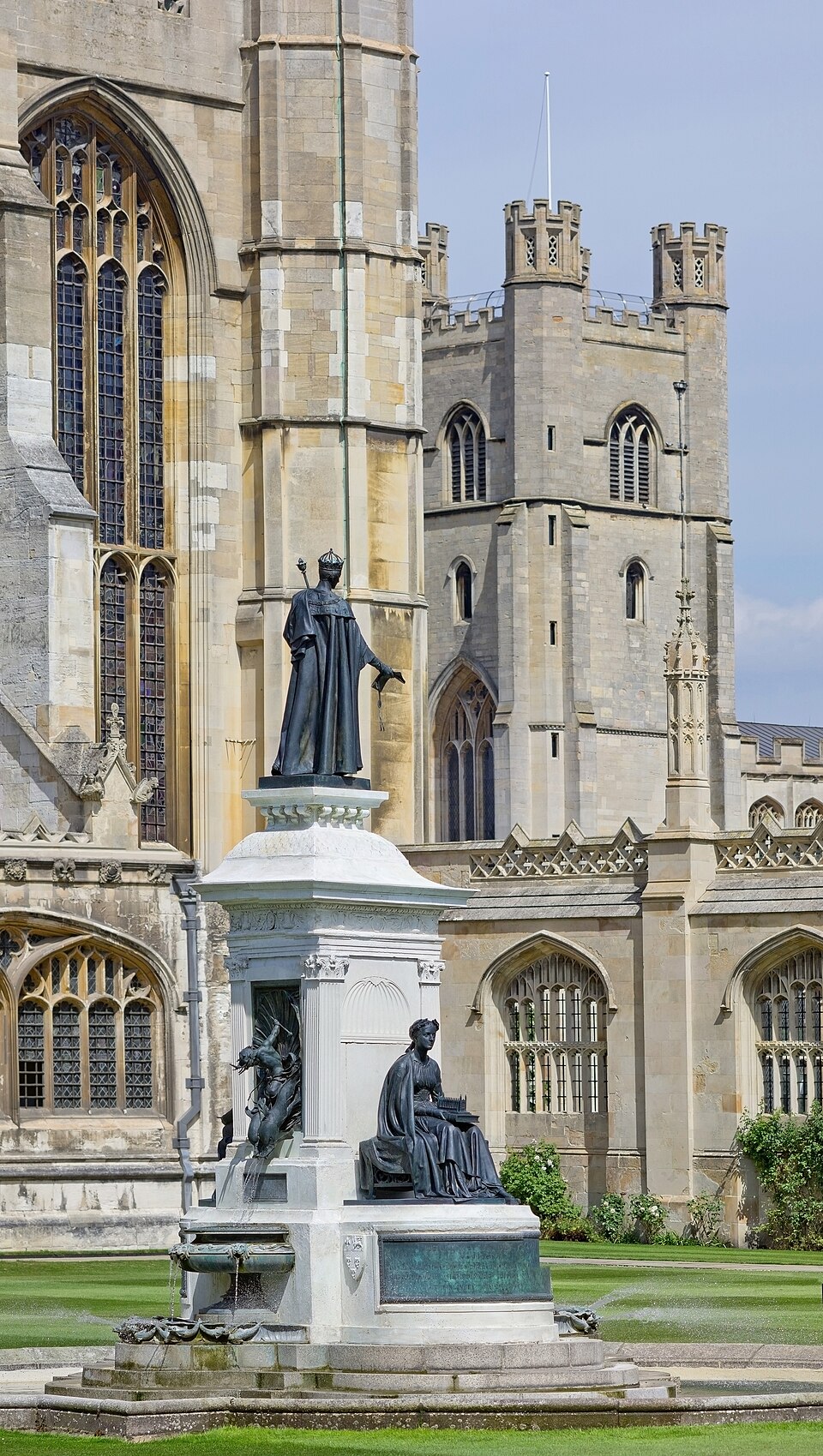
A royal foundation
King’s was founded in 1441 by Henry VI. His early plan was modest, but it quickly grew into an ambitious royal project. The College’s full historic title, The King’s College of Our Lady and Saint Nicholas in Cambridge, reflects both royal patronage and religious purpose. Henry’s enlarged scheme provided for seventy scholars and was closely connected to his other foundation at Eton.
The College is founded
Henry VI establishes King’s. The institution begins on a smaller site before plans are enlarged.
The Chapel foundation stone
The King lays the foundation stone of the Chapel, conceived on a scale unlike the chapels of other Cambridge colleges.
War interrupts the project
The Wars of the Roses disrupt royal funding and building. Work later resumes under Richard III and, on a larger scale, under the Tudors.
The main structure is complete
By the reign of Henry VIII, the great architectural form of the Chapel has been realised, with glazing and interior work continuing.
A decisive reform
Non-Etonians are admitted, ending a restriction that had shaped King’s for centuries and opening a new period in College life.
History is built into the courts
The College’s visual identity is a dialogue between medieval, classical and nineteenth-century architecture.
From exclusivity to a broader community
For more than four centuries, King’s admitted students from Eton College under a privileged arrangement rooted in Henry VI’s paired foundations. The nineteenth century brought major reform. Opening admission beyond Eton altered the College’s composition and helped establish the modern academic institution.
The physical College also changed. Henry VI’s intended great court was never completed as planned. The eighteenth-century Gibbs building, followed by William Wilkins’s nineteenth-century Gothic screen, gatehouse, hall and library, created much of the ensemble familiar today.
Independent thought
King’s developed a reputation for intellectual independence and liberal traditions. That reputation was not created in a single moment; it emerged from changing religious, political and academic cultures. The College’s modern identity draws on this history while placing emphasis on widening opportunity, research and a diverse community.