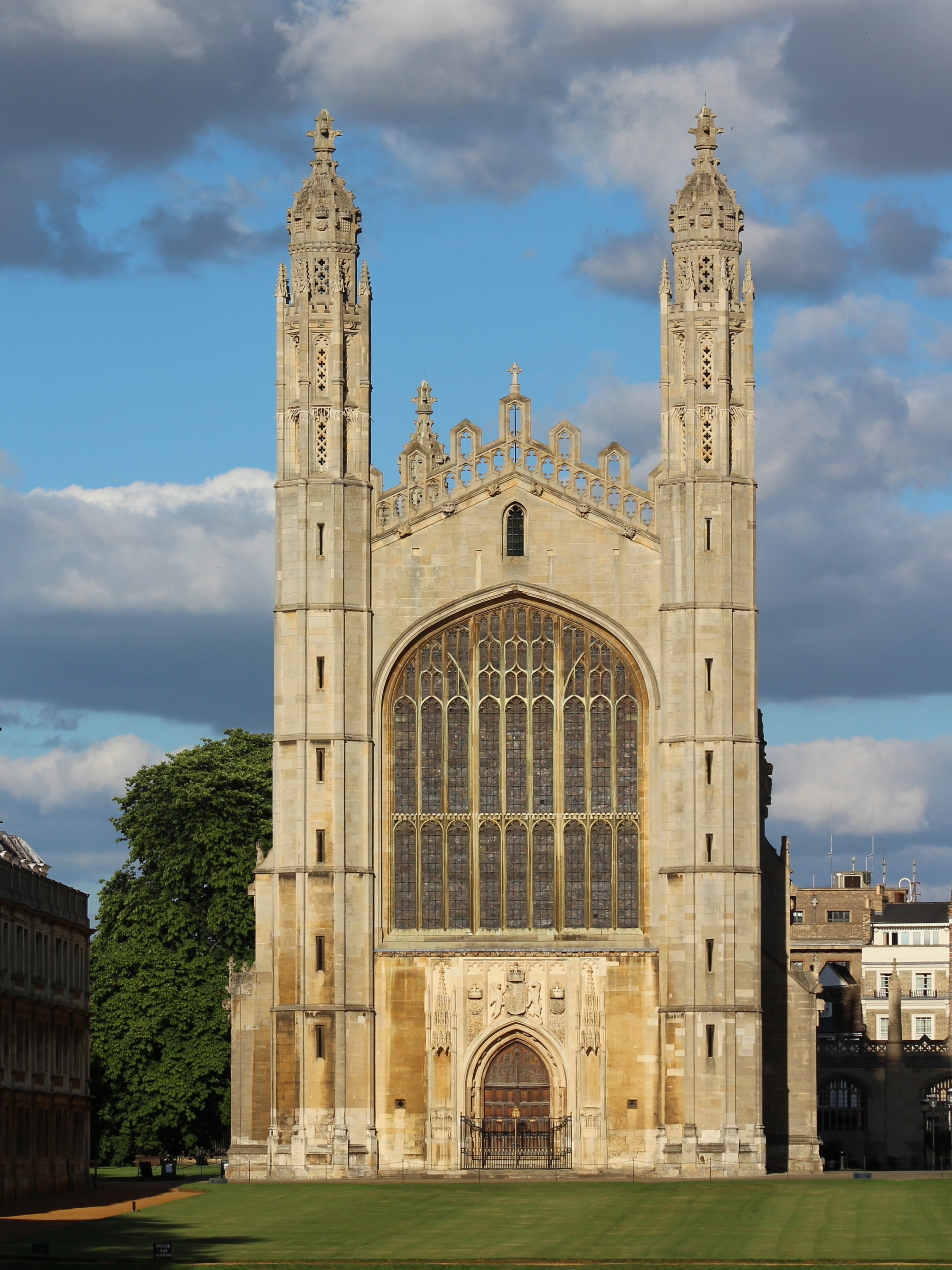

King’s College Chapel is the oldest surviving building on the present College site and one of the defining works of late medieval English architecture. Its scale reflects Henry VI’s ambition to create a collegiate chapel without equal.
A century-spanning building project
Work began five years after the College was founded. The foundation stone was laid in 1446. Political upheaval repeatedly affected construction: the Wars of the Roses interrupted funding, and the building advanced in phases under different monarchs. Richard III supported renewed work; Henry VII’s resources drove another major phase; and under Henry VIII the main structure, glazing and important woodwork reached completion.
Architecture as theatre
The Chapel was conceived on the plan of a cathedral choir rather than as a modest college chapel. Its immense windows, long interior, vertical proportions and celebrated fan vault create an experience in which stone, glass, light and sound operate together. The building has become inseparable from the visual identity of both King’s and Cambridge.
Fan vault
The vast stone vault unifies the interior with an intricate repeating geometry and an extraordinary sense of lightness.
Stained glass
The great windows survived periods of religious and political conflict and remain central to the Chapel’s atmosphere.
Choir screen
The Tudor screen and woodwork are part of the layered interior produced as the building moved from medieval foundation to Tudor completion.
Architecture designed to be heard as well as seen
The fan vault, stained glass, choir stalls and organ create a single visual and acoustic environment.
A living chapel
The building is not merely a monument. It remains a place of Christian worship and music within the College. Services bring together members of King’s, visitors and the Choir, preserving the Chapel’s original liturgical purpose while placing it within a contemporary collegiate community.
This living use is crucial to the building’s character. A visitor may encounter the Chapel as architecture; a musician as an acoustic space; a historian as evidence of royal patronage and religious change; and a member of the College as part of everyday institutional life.